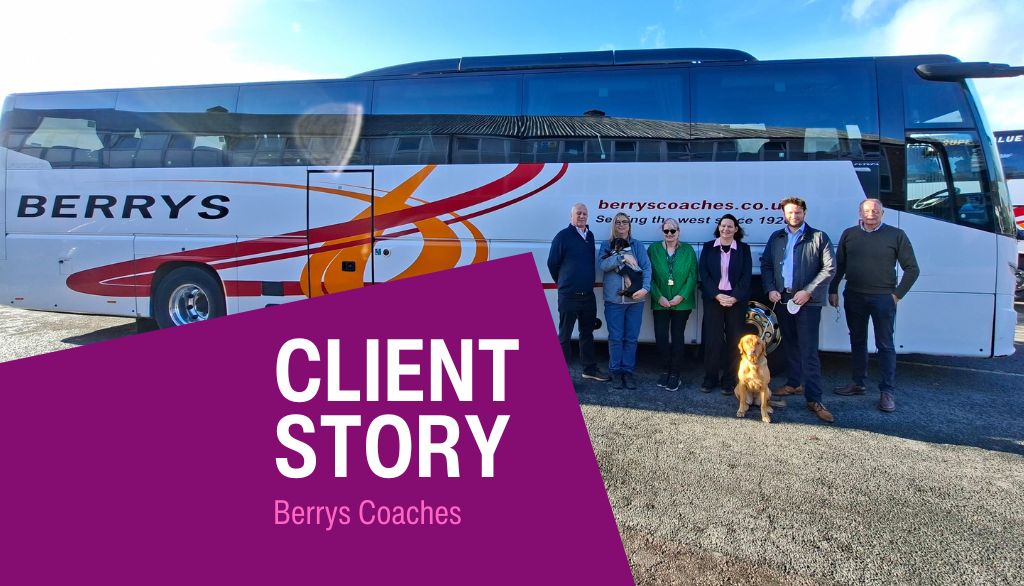
For more than a century, Berrys Coaches has been an integral part of Somerset’s transport landscape. What began in the 1920s as a small haulage and removals business has grown into one of the region’s leading coach operators, one which is now proudly employee owned and entering an exciting new phase of growth.
Today, the company is led by Managing Director James Berry, a fourth-generation family member, who oversees day-to-day operations, the company’s long-term strategy, and the continued evolution of a business that has adapted to changing markets throughout its storied history.
A Century of Evolution
The early days of Berrys were shaped from a simple start, with James’ great grandfather offering transport to local farmers and the wider community. Benches placed in the back of trucks soon led to the purchase of removal vehicles and then the company’s first coaches, putting in place the foundations for what Berrys would become. You could see the pride on James’ face when he was talking about the roots of the business. His great-grandfather clearly had an entrepreneurial spirit, and this has continued in the family.
In 1948 the nationalisation of the truck industry took that side of the business away overnight, and left Berrys with only three coaches. James’ Grandfather and Great Aunt developed coach business and in 1965 moved the company to Taunton and developed a purpose bult coach depot.
Fast forward to the 1980 and the next defining milestone, when the government denationalised express coach routes. Berrys launched the London Superfast service, which remains a core component of the company’s offer, with demand standing strong even now.
Since then, under the management of Stuart Berry (James’ father), Berrys has expanded its reach, providing more school transport contracts, commercial tour company contracts for tours in the UK and Europe, and organising Berrys own UK day excursions, all areas of increasing growth, plus taking on specialist work for the MoD. With 65 vehicles, bespoke facilities in Norton Fitzwarren, alongside two satellite hubs in Exeter and Bridgwater, the business has broadened its reach without losing the family-run ethos that has served it so well.
The Next Chapter
More recently, Berrys started to explore how best to secure its long-term future. One option included selling the company, with one offer coming close to fruition and reaching a stage of due diligence, before it fell through for commercial reasons. What was at the forefront of James and Stuart’s minds was the preservation and protection of their workforce and ensuring the Berrys name survives.
They were becoming increasingly aware of employee ownership and the opportunities it afforded. With Stuart thinking of retirement, reluctantly James might add, the thought of making the transition to an Employee Ownership Trust (EOT) started to look more and more appealing.
Having heard of other coach companies which made the change, it seemed like a good fit. It was a chance to protect the family’s legacy, reward the people who make the business possible, and ensure continuity of service for employees and customers.
Working With Stephens Scown
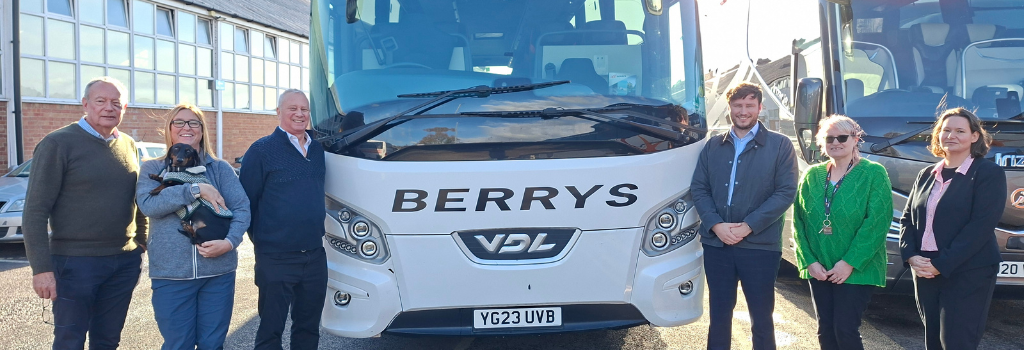
Seeking specialist guidance, Berrys turned to Stephens Scown’s employee ownership team, led by Cat Carlton, partner in the Corporate team. It followed a recommendation from one of its directors, Ian, a litigation lawyer with knowledge of contacts in the sector who had been with Berry’s for nearly 12 years. It helped that Stephens Scown had a local presence in Somerset. While some of the meetings took place virtually, it was important for the Berry’s team that they could meet their advisors face to face.
Right from the initial conversation, the team’s practical, no-nonsense approach made an impression. “Cat was very down to earth and immediately understood what we wanted to achieve,” James said. “The whole team made the process simple to understand, though employee ownership is a very different structure when measured against what most people are used to.”
Stephens Scown supported Berrys through the process, which initially meant talking to the company’s directors. It was six months after those exploratory meetings before the next level of management was brought into the conversation, to bring them on board and further investigate how it would work for the business. The transition also needed an approval from the Secretary of State due to Berry’s contracts with the MoD which the team at Stephens Scown assisted with.
Engaging the Workforce
With more than 115 employees across the business, clear communication with the employees was critical given the impact for everyone. An email was sent to the employees setting out what the plan was and dismissing rumours of a sale after an update on Companies House sparked talk among the staff. The management team was very keen to show the employees that, this decision to transition to an EOT, was made with their interest in mind. Keeping them informed and calming any worries, James brought in Cat and Samuel Moles to run a session on what an EOT is, and to answer any questions. James also did further in-person presentations with employees, with a version available online for those unable to attend the live sessions. He said, “We wanted to make sure everyone heard it directly from us. Most people had never come across an EOT before, so taking the time to explain it properly was very important.”
With support from colleague George Demirev in the Corporate team, Cat pulled together the development and refinement of trust documents and the share transfer to the trust, plus helped shape the design of the company’s employee benefit and profit-share framework. Dave Robbins also assisted with the necessary government notifications and the government approved the transaction. The team at Albert Goodman assisted with the HMRC clearance and business valuation.
The employees naturally started doing their own research into employee ownership and what it would mean for them being “owners” of the business. When a business becomes employee owned, eligible employees can be entitled to a bonus which is free of income tax. The eligibility criteria and rules for such a bonus can be very complex. James maintained clear communication channels and open dialogue with the employees, and together with the team at Stephens Scown, created a structure that would work for Berrys’ operational model
Early signs are positive. Berrys has already made its first profit share payment, established a representative board, and invested in a Head of Business Development and Culture to help embed the new ownership model and establish a base to build from for the future.
Foundations for Growth
Employee ownership came at a time when demand for the London Superfast service remains on the strong. As it explores additional return journeys as well as expansion into new geographic areas where satellite hubs can ease recruitment pressures and support growth, Berrys continues to build relationships for long-term success.
Alongside its work with tour companies and expanding school contracts, Berrys has seen demand increasing and new opportunities emerging. For James, the focus is on strengthening culture, empowering staff, and building a shared vision for the future. “I think for me it’s about staff retention as well, retaining good staff and having them feel engaged with our vision and what we want to do.”
Looking to the Future
The transition to employee ownership marks the start of an exciting new period in the Berrys story, one that protects the legacy of this Somerset family business, while giving a meaningful stake in its success to its employees.
With continued support from Stephens Scown as Berrys leans into the positive aspects of being an EOT and engaging with the community, it is poised for sustainable, people-centred growth, one that benefits its people, and the passengers it serves.