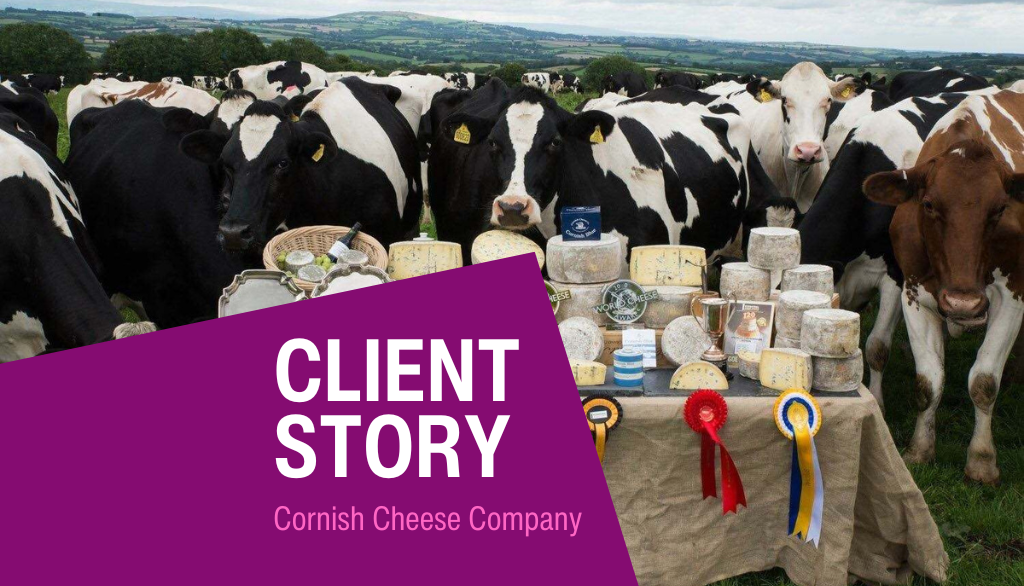
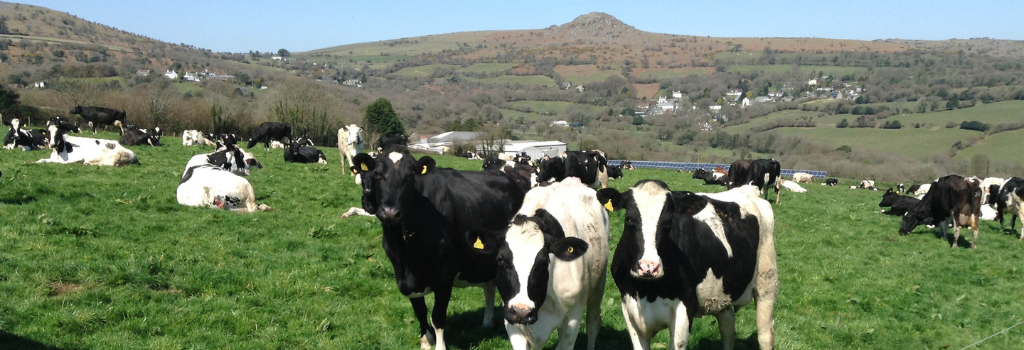
Situated at the edge of Bodmin Moor, the Cornish Cheese Company is a family-run business whose story encompasses farming, resilience, and a willingness to adapt.
Farm Diversification
Now celebrating its 25th anniversary, the Cornish Cheese Company started life as a traditional dairy farm. When the milk price crash of the early 2000s hit, the Stansfield family was faced with a stark reality. Selling milk alone was no longer sustainable, nor financially viable, prompting a search for ways to add value and secure the farm’s future.
After exploring several options, they settled on cheese making. The decision was as practical as it was creative, allowing them to maximise the value of their milk while reducing their reliance on fluctuating milk prices. Research had shown that at the time, no blue cheese was being produced in Cornwall, so it seemed to be a chance to create something new and distinctive.
This led to the launch of Cornish Blue, a creamy, slightly sweeter blue cheese designed to appeal to a wider audience than the more traditional, stronger varieties already available to consumers.
In that early period, growth was steady. Production of the cheese remained on a limited scale, with a focus on producing for local hospitality venues, farm shops, and deli counters across the South West. That all changed in 2010 when Cornish Blue won at the World Cheese Awards, coming out on top against 2,500 cheeses submitted from across the globe.
That win, and the increased brand awareness helped transform the business. It led to a significant increase in demand for the product, opening up new markets and allowing the business to expand both production and its team, as the cheese outgrew the farm.
Building Resilience
Despite the immediate success following the award win, the company soon faced new challenges. Like many businesses in the food and hospitality sector, the Covid-19 pandemic had a marked impact.
The hospitality and deli counters, still responsible for the majority of sales, closed overnight. It saw approximately 96 percent of its revenue disappear in a matter of days. Suddenly, the company was left with large volumes of perishable stock, and a limited time to act.
A rapid response saw the team establish an online shop, for the first time opening a channel to sell products direct to consumers. Not only did this help to stabilise the business through a tricky period, but it also brought about a new way to engage with customers.
That pivot to an online platform proved transformative. It highlighted the risks of relying too heavily on a single product or sales channel, prompting the business to take a more strategic approach towards future growth.
Expanding and Investing
Having seen the success of Cornish Blue, part of the new long-term growth strategy saw the Cornish Cheese Company diversify its product offering. Drawing on some of the recipes originally developed during the company’s early days, it reintroduced and refined a wider range of cheeses.
Alongside the award-winning Cornish Blue came its goat’s milk counterpart, Cornish Nanny. It was swiftly accompanied by a variety of soft cheeses, including Cornish Brie, Camembert-style cheeses and a triple cream Brie. Other products, such as a Cornish cheddar, have further enhanced and strengthened the overall range.
With an expanded offer, the company invested in new production facilities, including a dedicated dairy for its range of soft cheeses. These investments paid off, playing an important role in the business’s recovery and subsequent growth.
Within two years of the pandemic ending, the Cornish Cheese Company had returned to its pre-Covid position. Just two years later, it had doubled in size, primarily thanks to that decision to expand the product portfolio and the strength of the brand itself.
Boosting the Brand
Seeing the business evolve, there was recognition that the company’s branding needed to evolve too. Having originally centred around a single product, the company undertook a full rebrand to better reflect its broader offering and to keep up with future ambitions.
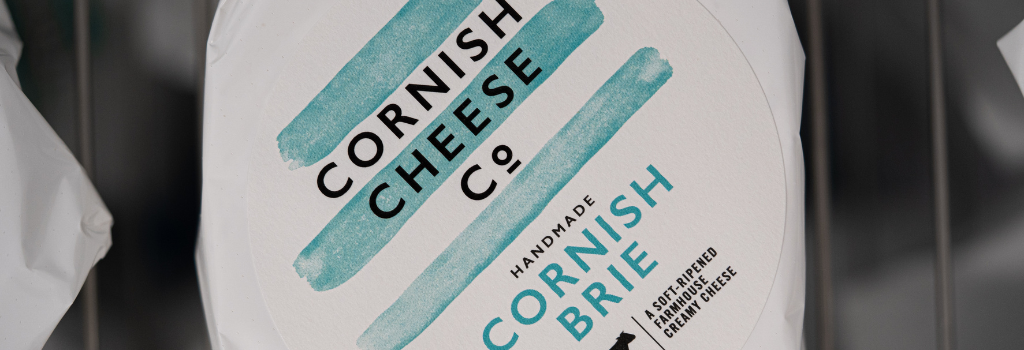
Led by Ben Stansfield, family member and sales director, it resulted in a distinctive new identity, characterised by bold striped packaging that was recognisable and reflective of its Cornish heritage. The goal was to create a brand that communicated quality, provenance, and consistency across the expanded product range.
With that increased brand recognition, there was a realisation that it required greater protection. Ben said, “If we’re going to keep growing this brand and keep pushing it to different markets in different areas, we want to protect it. People know if they see those stripes, they can trust them.”
Brand Identity
The company turned to Stephens Scown for help, taking advantage of the firm’s specialist food and drink sector expertise. Working with Olivia Richards, the firm’s trademark attorney, the company sought to secure protection for its brand and visual identity. In order to secure protection, the company had to demonstrate the distinctiveness of the brand. It considered evidence of sales, market presence, and industry recognition. A complex process, the business found reassurance in the strength of the case presented.
Working closely with Olivia and the Stephens Scown team, the process was navigated with clarity and support throughout. Ben said, “There’s always doubt when you’re investing money, but what we read gave us real confidence and that we had a bulletproof case. Olivia did an amazing job, it was all very clear to us, very well put together and communicated. Working with Stephens Scown made it a lot easier and more straightforward. We got the outcome we wanted, so couldn’t ask for more really.
“Thanks to Olivia and the work put into it, it gives us security as we move forward as a business.”
The successful outcome has given the company greater confidence as it continues to invest in and grow its brand.
A Sustainable Future
25 years on from its inception, the Cornish Cheese Company remains firmly rooted in its family origins. With Ben now playing a leading role, and his sister leading the operations side, the business continues to combine traditional methods with future-focused innovation.
With a team of 15, all production still takes place on-site and is hand packed, maintaining a strong emphasis on quality and control, with a real commitment to sustainability. There has been significant investment in renewable energy, including solar power, plus a micro anaerobic digestion system that converts farm waste into clean energy. These investments form part of a wider ambition to become energy self-sufficient by 2030, reducing environmental impact and improving long-term cost stability.
Looking further ahead, the company has ambitious plans to continue with its growth. It includes expanding production capacity through new facilities, broadening its product range, and exploring export opportunities in markets such as Europe and the Middle East, where there is strong demand for speciality cheeses.
With brand protection secured, a diversified offering, and a clear strategy in place, the Cornish Cheese Company is well positioned for the next stage of its journey.