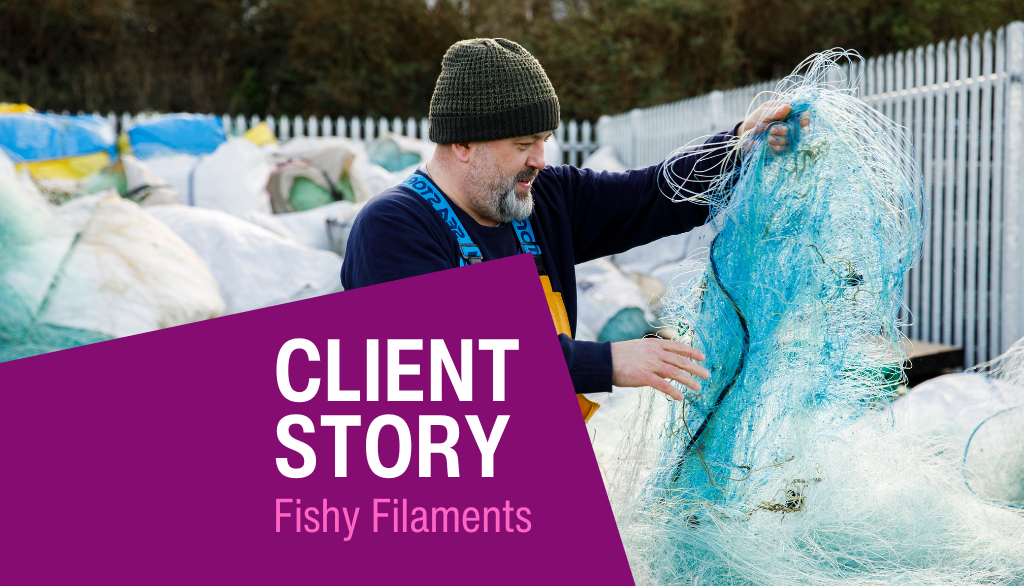
When Ian Falconer initially began to explore the potential of plastics recycling in Cornwall, it wasn’t with the intent to build a business that would one day attract interest from governments, NGOs, and global manufacturers. Like many innovative enterprises, however, the work of Fishy Filaments, now trading as Orca, started from a place borne of curiosity, persistence, and a belief that small ideas can spark big change.
Global and Local
An expansive career saw Ian work across sectors and continents. It encompassed early roles in oil and gas in the North Sea, to upgrading the Greek national telephone network for the first ever 3G Olympic Games in 2004, to corporate mining and energy analysis across Africa, Asia, and Australia. That background and range of experience shaped a deep understanding of systems, infrastructure, and environmental risk. The global perspective helped to shape the next stages of Ian’s career.
Coming home to Cornwall so he could pursue further postgraduate study in energy policy and sustainability, Ian began consulting for mining clients. It was this work that led him to investigate long-term market trajectories for metals and, later, to experiment with early 3D-printing materials at home. It was his interest in the nascent technology that would eventually play a prominent role in what was to follow.
During the initial testing and experimentation, Ian had what he described as, “a kitchen full of equipment that didn’t explode”. Those trials proved that the principles he uncovered were sound, especially when it came to particle behaviour and heat exchange. The next stage was to find a way to channel the knowledge into real-world applications and where it could have an impact.
Global Potential
The answer came thanks to Cornwall’s fishing industry, where the nylon nets, once no longer usable, proved expensive to dispose of – often ending up stored onshore, stockpiled, or discarded. Though small-scale options to recycle existed intermittently, there was nothing capable of managing the sheer volume of nets in a way that could be processed sustainably.
Spotting that the same particle dynamics he had studied in environmental geology and applied in his early lab work could be utilised in cleaning and processing nets into a high-value engineering material, Ian started to, as he said, “Chase the harbour master around for a while”, which saw him secure access to discarded fishing nets. The opportunity to put his theory into practice became viable.
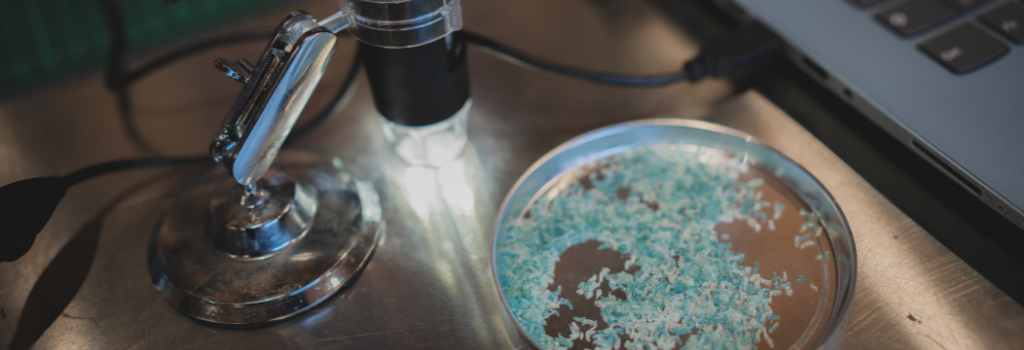
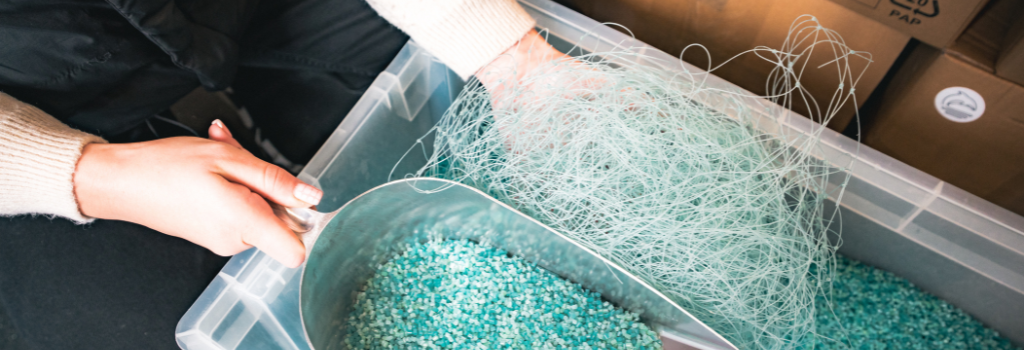
Then came 18 months of experimentation, which resulted in what became a patented process of probabilistic shaped particle cleaning. It’s a technique which drastically reduced the amount of energy and water required to prepare nylon for remanufacture. Ian’s work in this period was rigorous, technical, not to mention ambitious, but fixed firmly in dealing with a clear environmental issue.
Having evidence that his method worked and was viable, Ian launched an early crowdfunder, which garnered an encouraging response – looking for £140,000, he managed to secure £213,000, a clear show of support for his ambitions. Fortuitously, a short while after launch, the release of Blue Planet saw a surge in public awareness of marine plastic pollution. The programme provided further validation of the problem that Ian was working to address.
Scaling Up
That increased understanding of the problem, coupled with investor support and a growing interest from industry saw Fishy Filaments set up a base at Newlyn Harbour. Two custom-built container units were designed to further test not just the technology itself, but whether a small-scale recycling model could operate under real environmental conditions. The Cornish wind, rain, storms, and heat all helped inform how the technology could be deployed globally. This was vital for regions with limited infrastructure.
Further crowdfunding across four rounds brought in an additional £1.02m, plus £50,000 in grants, and around £200k in sales revenue from the company’s pilot plant. 2019 saw the company develop its first commercial products, which included the world’s first 100% recycled nylon filament for use in 3D printing. It attracted enough attention that Ian found himself collaborating with Philips Lighting. Coastal Breeze was a collection of 3D printed light fittings made with Fishy Filaments’ recycled material, and saw the products win a series of global design awards.
For Ian, it was an indication that he was firmly on the right path and starting to make an impact. As he said, he had gone, “from a container on a Cornish harbour, to a product launched with Dutch royalty.”
High-Value, Low-Carbon
As demand continued to grow, Ian’s work expanded into creating higher-value materials, combining recycled nylon with recycled carbon fibre. That became Orca, an engineering-grade composite which was strong enough for use in advanced manufacturing, eyewear products, automotive components, and other industrial applications.
That development took the business to a new level, from recycling innovation to a high-value materials business with global reach. Orca’s products are exported for use across Europe and Asia, and lifecycle assessments confirm it has up to 95% reductions in carbon emissions when measured against virgin nylon.
Building the Business
In the process of evolving from kitchen-table prototypes to international acclaim, Ian quickly understood the need for legal expertise. Not only to protect his intellectual property, but to ensure the company’s foundations were as solid and secure as its environmental mission.
Ian said, “Like many first-time founders, I was conscious of not knowing what I didn’t know. Once external shareholders from crowdfunding became involved, safeguarding their interests, navigating compliance, and avoiding missteps became essential.”
It was thanks to Ian’s participation in local business networks that he met Gavin Poole, partner in Stephens Scown’s Corporate team, and who, alongside specialist legal advisors Amy Ralston, Thomas Chartres-Moore and Olivia Richards, helped support Ian in:
- conducting an IP Audit to build an IP strategy
- preparing commercial terms of supply
- forming the right corporate structures
- advancing trade mark and IP protection in the UK, EU, and US thanks to trade mark specialist Olivia Richards
- ensuring compliance for his clients, NGOs and government partners
- ensuring website compliance
- advising on director agreements and governance as the company began to build in scale.
Gavin agrees with Ian’s assessment in terms of founder knowledge. “It’s important to know your limitations, and we’re proud to support Ian with periodic check-ins and understanding what’s needed as he continues to grow the business. It’s helpful to know what’s coming up and to work with him and see the brilliant work being done.”
The partnership between Ian and Stephens Scown grew into a trusted relationship. Bringing in other experts from the firm’s Intellectual Property and Data Protection team, Amy Ralston has led on IP strategy and commercialisation protection for Fishy Filaments, including IP audit support and website terms use and terms of supply, while Olivia Richards has led on trade mark protection, including global trade mark matters.
Additionally, Ian was supported by Stephens Scown’s Employment team and HR specialists to ensure early employees had the right protection, especially important during the pandemic with remote working challenges. Having access to dependable, reliable advice gave Ian peace of mind. “Having that third-party oversight takes so much weight off your shoulders. It lets me focus on the big-picture work without worrying I’ve missed something important.”
A Global Opportunity
Now, Orca is ramping up its international deployment, Ian’s technology is attracting interest from governments across the world. Organisations such as WWF and the UN have engaged Ian, asking for his expertise and knowledge in discussions on marine plastics, sustainability, and on recycling strategies.
There are plans for partnerships which would see recycling units established worldwide in locations where fishing nets are available to be recycled. These locations offer local employment, an opportunity to reduce ocean pollution, and to create value from materials that would otherwise be treated as waste, plastics leeching into oceans and waterways.
The ambition is that at scale, it’s a model that could support hundreds of sites processing thousands of tonnes of nets, all while having real economic impact for coastal and fishing communities. While the company remains firmly fixed in Cornwall, it continues research and development, to build its team, and prepares for the next growth phase, all while its global impact is felt beyond the South West.
Looking Ahead
A single container on a Cornish harbour has become a business with the potential to transform an entire global supply chain. Ian’s ambitions are similarly global facing. “With the right investors, partnerships, and our continued innovation, I believe that within 20 years, ‘ghost gear’ – the abandoned nets which contribute heavily to marine pollution – could be eliminated entirely.”
Stephens Scown remains a partner on that route towards environmental protection, ensuring the company’s legal foundations remain as strong and future‑proof as the technology itself. It’s a relationship built on a supportive, collaborative ethos.
Orca’s story is a demonstration of how innovation developed on the Cornish coast can shape a more sustainable world.