Ten years on from becoming the UK’s first large employee-owned law firm, Stephens Scown has seen sustained growth in both financial performance and employee engagement. But the impact of employee ownership goes far beyond the numbers.
When we transitioned to employee ownership in 2016, it was a bold move – particularly in a profession where traditional partnership models dominate and profit-sharing is often limited to a few. Our decision was driven in part by a desire to give all eligible employees an equal share in the firm’s success, but also by a belief that a different ownership model could create a stronger, more sustainable business.
A decade later, that belief has been tested, refined and proven in practice. Employee ownership is not a silver bullet. Unlocking its full potential requires commitment, education and a deliberate approach to cultural change. But when embedded effectively, it can be transformational.
As active members of the Employee Ownership Association (EOA), we have continued to learn from and contribute to the wider employee ownership community, sharing insights through initiatives such as our Employee Ownership Info Hub.
Ten years on: measurable impact
A decade on, employee ownership has delivered both cultural and commercial results. What began as a values-led decision has become a key driver of resilience, talent retention and sustained growth.
When people understand how the business performs and feel connected to its outcomes, behaviours change. Engagement strengthens, collaboration improves and decision-making becomes more effective. The result is a business that performs better because its people are fully invested in its success.
That impact is reflected in consistently high engagement scores, strong retention rates and recognition as a leading workplace.
Culture as a competitive advantage
Our employee-owned model has reinforced a culture built on trust, fairness and shared responsibility. This stability has helped us attract and retain talented people who are aligned with our purpose and long-term vision.
For clients, this translates into stronger relationships, greater consistency and a genuine partnership approach. People who feel invested in the business bring a different level of care and commitment to their work – and that is felt in the service we deliver.
More than a cultural benefit, this has become a clear competitive advantage.
Long-term resilience and sustainable growth
Employee ownership encourages a longer-term perspective. Without the pressure of short-term exits or external shareholder demands, the focus shifts to sustainable growth, considered investment and collective problem-solving.
This approach has strengthened resilience, particularly during periods of economic uncertainty and disruption.
In 2024–25, the firm delivered its strongest financial performance to date, with further growth forecast. This reflects a model designed not just for immediate success, but for long-term stability and progression.
Innovation driven by employee voice
Giving employees a meaningful stake in the business also gives them a stronger voice. Ideas generated across the firm – from client service and technology to governance and ways of working – have driven continuous improvement.
Our governance model ensures those ideas are not only heard but acted upon. Following a comprehensive review, trustee representation has now been introduced at board level, embedding employee perspective directly into strategic decision-making.
This is not symbolic. It reflects a genuine shift in how decisions are made and how the business evolves.
The core benefits of employee ownership
Over the past ten years, several consistent themes have emerged.
A more engaged and motivated team
When people share in the success of the business, their connection to it deepens. We’ve seen stronger collaboration, greater accountability and a willingness to go the extra mile for clients and colleagues alike.
This is reflected in our employee engagement and retention data:
| 84% engagement score – 10% above the legal sector average | Improvements in 19 out of 22 engagement categories | 7% flight risk compared to an industry average of 41% |
We have also been recognised as one of the Sunday Times Best Places to Work for the last two years, and for seven consecutive years prior to that (with one year paused for an internal employee engagement initiative).
Behind these figures is a culture where every voice matters – embedded in how we make decisions, shape strategy and develop future leaders.
A stronger, values-driven culture
Employee ownership has strengthened a culture rooted in fairness, trust and shared responsibility.
It has enabled us to protect and evolve the qualities our clients value most – openness, integrity and a collaborative approach. At the same time, it has helped us attract people at every stage of their careers who are looking for purpose and alignment, not just a role.
The result is a culture that is both cohesive and resilient.
Greater resilience and long-term thinking
Our employee-owned structure naturally shifts focus away from short-term pressures and towards sustainable, future-focused decision-making.
This has supported the firm through market challenges and wider economic uncertainty, encouraging calm, collective problem-solving and financial discipline.
The result is not only cultural strength, but consistent commercial performance – including record financial results in 2024–25, with further growth anticipated.
Innovation fuelled by employee insight
With ownership comes influence. Our people actively contribute ideas across all aspects of the business – from innovation and client service to community impact.
These contributions have made the firm more agile, more responsive and better equipped to adapt to change.
The introduction of trustee representatives to our strategic board is a clear example of this in action, ensuring employee voice is embedded at the highest level of decision-making.
Scownership: how our profit-share and ownership model works
Our employee ownership model – which we call Scownership – is designed to give everyone a genuine stake in the business.
Every eligible employee receives an equal share of profits, regardless of role. This reinforces the principle that everyone’s contribution matters and that success is shared collectively.
Our Scownership trustees, drawn from across the firm, represent employees by engaging directly with the Board. They provide feedback, raise important issues and help shape decisions – ensuring that employee voice drives meaningful change.
This model benefits not only our people but also our clients:
| Engaged employees deliver stronger client service | Employee-owners are more invested in outcomes | Our people understand the realities of running a business |
We can better support clients who are themselves exploring or operating employee-owned structures.


How we help businesses explore and implement EOTs
Our experience as an employee-owned business also informs how we support our clients.
As one of the first large UK law firms to adopt an Employee Ownership Trust (EOT) model, we understand both the technical requirements and the cultural considerations involved in a successful transition.
Through our work with organisations across the UK, we combine legal expertise with lived experience – helping clients navigate:
Whether employee ownership is right for them
Governance and trustee responsibilities
How to structure a transition
Leadership and cultural alignment post-transition
Not every business is suited to employee ownership. But where there is alignment between values, leadership and long-term vision, it can be a powerful and sustainable model.
Importantly, the journey does not end at transition. Ongoing support – from trustee training to employee education – is critical to long-term success.
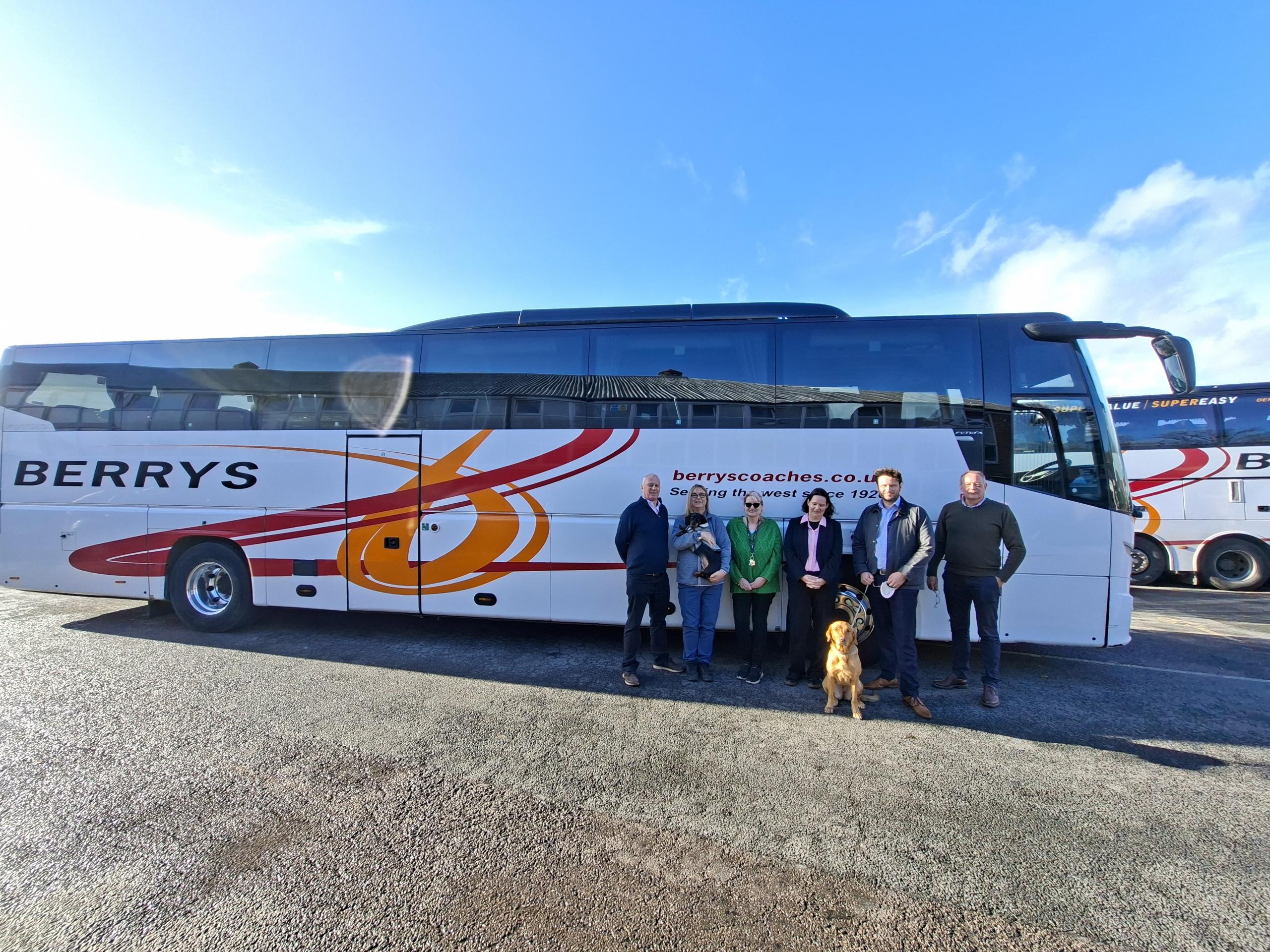
James Berry, Managing Director, Berrys Coaches
“Cat was very down to earth and immediately understood what we wanted to achieve”.
“The whole team made the process simple to understand, though employee ownership is a very different structure when measured against what most people are used to.”
Resources: guides, events and client stories
Over the last decade, we’ve developed a range of resources to support businesses at every stage of their employee ownership journey.
These include:
Employee ownership is a journey – not just a transaction. Our aim is to make that journey clearer, more accessible and more successful for the businesses we support.

Looking ahead
Ten years on, employee ownership remains central to how Stephens Scown operates and grows. It has strengthened the business culturally and commercially, while reinforcing a long-term view of success.
Our experience shows that, when done well, employee ownership is more than an alternative structure – it is a foundation for building a resilient, engaged and high-performing business.
And we’re only just getting started.
How can we help you
"*" indicates required fields
What is an Employee Ownership Trust (EOT)?
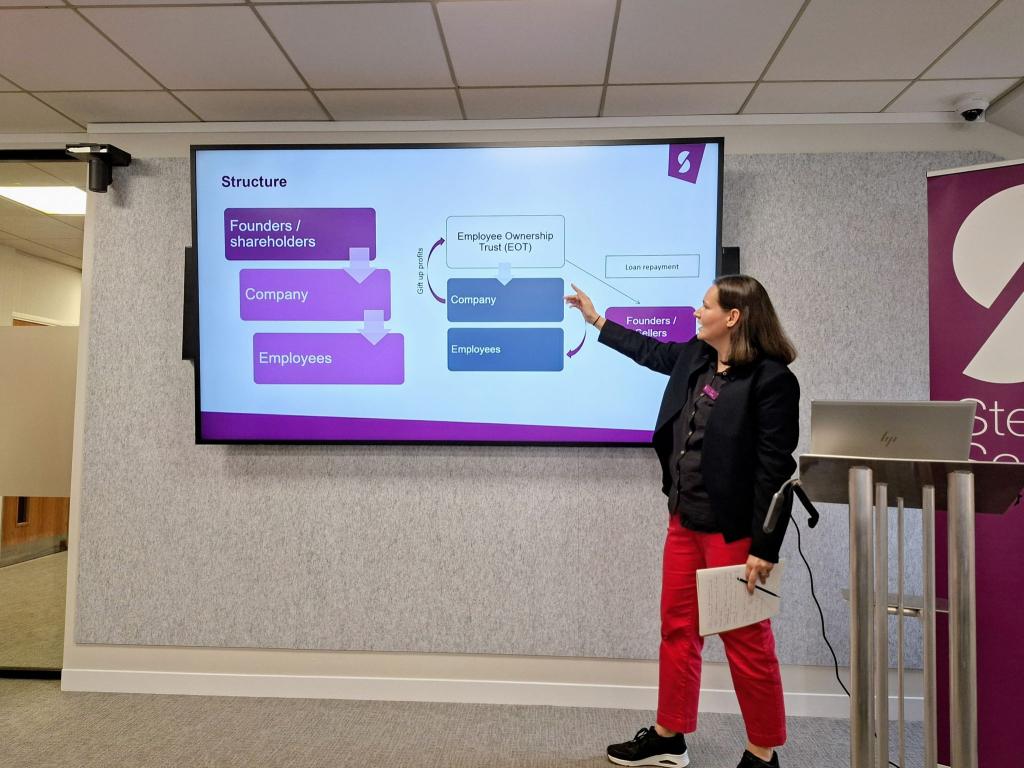
An Employee Ownership Trust (EOT) is a type of discretionary trust in which holds shares on behalf of employees. There is usually a corporate trustee rather than individual trustees. The employees do not have individual shareholdings. The trust documents are drafted in a specific way to ensure that the trust meets the requirements for tax advantages. There is a complex set of rules to follow at the time of the transition and afterwards.
Employee Ownership works for the business, the employees and the sellers!
Studies have shown that EOBs are 8 – 12% more productive than other similar businesses which are not employee owned. Staff attrition rates are lower. There is a more cohesive workforce as they are all in it together.
A sale to a qualifying employee ownership trust is eligible for a reduced capital gains tax rate – 50% of the prevailing rate – which is a perk for the seller. It is the most tax efficient way to sell your business.
If the company pays a profit share, this can be paid to the employees free of income tax up to £3,600.
An EOT is a long-term choice. A business is likely to stay in employee ownership for the lifetime of the business. It embeds a business in its location which contrasts with a trade sale – buyers often consolidate their purchase with their existing business in their existing location. Employee-owned businesses usually have better staff retention.