
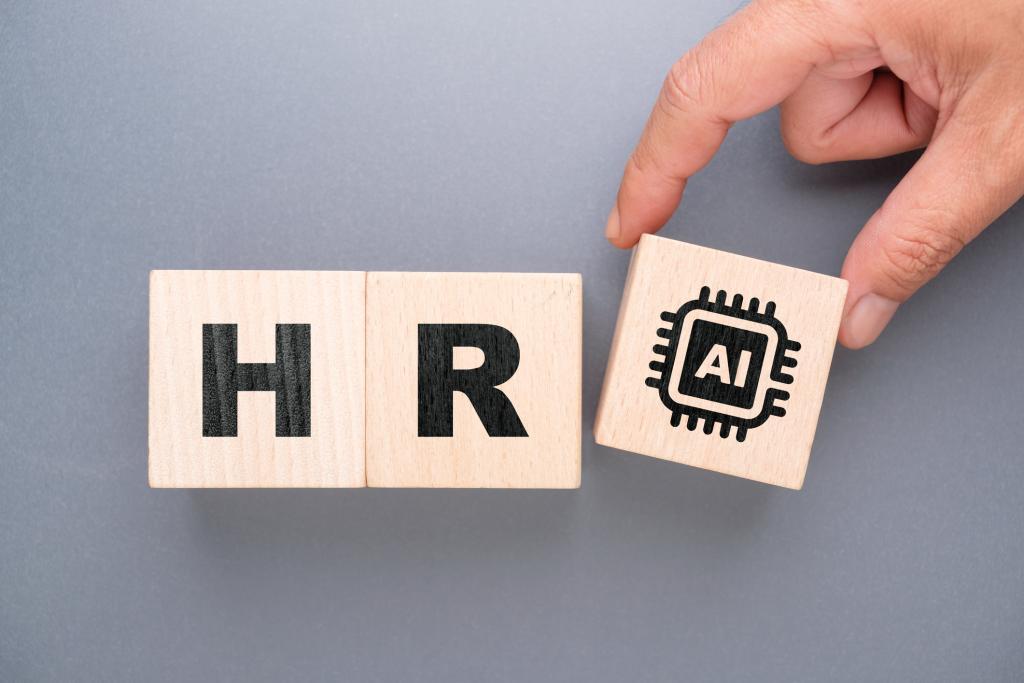
Artificial intelligence is rapidly becoming part of everyday life. From recruitment and HR processes to customer service, marketing, education and business operations, organisations of all sizes are exploring how AI can improve productivity, drive innovation and support their people.
Used responsibly, AI has the potential to create genuine benefits. It can improve accessibility, support neurodiverse individuals, reduce administrative burdens and help employees focus on higher value or more purposeful work. However, adopting AI responsibly requires more than simply selecting the right technology.
The most successful organisations recognise that AI is not an IT issue alone. It is a business-wide governance issue that touches people, processes, data, compliance, ethics and organisational culture.
For this reason, many HR professionals are part of or leading the AI revolution in their businesses. We recently held a series of roundtable discussions with HR leads of our key clients, to look at this issue and consider how, if we are proponents of Ethical HR, we can get this right.
How is AI being used within HR Teams?
AI use can arise at almost every stage of the employment lifecycle, including:
- drafting job descriptions and recruitment materials;
- sourcing and screening candidates;
- answering applicant and new starter questions through chatbots;
- preparing policies, letters and other HR communications;
- supporting learning and development;
- assisting with workforce planning and administrative tasks; and
- analysing workplace information and producing recommendations.
Different businesses are using AI in different ways but the level of engagement with AI at this stage within the HR teams was cautious and mainly to look for efficiencies.
Ultimately, we discussed that the employer remains accountable for decisions and communications even if AI helped to produce them. It was recognised that incorrect or poorly contextualised outputs could contribute to inconsistent treatment, procedural unfairness or discrimination.
It can also lead to ‘AI tone’ on communications that can really impact how genuine the Company is – which can really damage culture and values. This was a real concern, especially for Employee Owned and B Corp businesses.
Governance before technology
One of the biggest challenges facing organisations is balancing the opportunities presented by AI with their responsibilities to employees, customers, students and other stakeholders.
Effective AI governance requires organisations to consider:
- data protection and privacy;
- cybersecurity and confidentiality;
- intellectual property and copyright;
- transparency and accountability;
- bias and discrimination risks;
- regulatory compliance;
- employee training and awareness; and
- environmental and sustainability impacts.
We recognised that without a clear framework, organisations risk inconsistent use of AI, increased security exposure, poor decision making, issues around performance and misconduct that are hard to manage and damage to trust and reputation.
Keeping humans in the loop
A key principle emerging from our discussions and from regulatory guidance is the importance of meaningful human involvement in AI-assisted decision making.
The Information Commissioner’s Office has highlighted the need for organisations to carefully assess where automated decision-making is being used, particularly in areas such as recruitment and workforce management.
The central question is not whether AI is used, but whether appropriate human oversight remains in place. This is a fundamental principle for all AI use – not just automaton.
Professional judgement, experience and critical thinking remain essential. AI outputs should support decision making, not replace it.
After all, AI can only provide information based on the prompts and context it receives. If an individual lacks the expertise to assess whether an output is accurate, lawful or appropriate, over-reliance on AI can create significant risks. The responsibility for the final decision must remain with a suitably qualified human decision maker.
This also aligns with what most leaders and HR professionals know – that sometimes it takes human intervention to find ways forward rather than over reliance on systems and processes.
AI use by Employees
All of our HR clients are experiencing an increased use of AI by employees in preparing grievances and in responding to management challenge. Although AI can be helpful to aid an employee in explaining their concerns, often the resulting written allegations / concerns are considerably longer and more complex than the actual key issue that the employee has. This is resulting in very long complex internal processes, which can hinder a quick successful resolution.
We discussed the need to engage in early with empathetic and emotionally intelligent discussions around concerns, to seek resolution, before the employee decides to commit concerns to writing. There is an increased case for workplace mediation to also cut through to a solution. You can read more about this here.
Interestingly, this emphasis on early resolution aligns with the proposed changes to the ACAS Code on Disciplinary and Grievance Procedures, following extensive consultation which closed on 23 September 26.
Ultimately if early resolution can’t be found, HR teams will need to balance proportionality with the need to undertake a fair process when working through long AI drafted complaints. It’s very high risk to simply say the complaint is vexatious or too long, so the Company won’t deal with it.
Policies, processes and people
We explored that responsible AI adoption requires more than an AI policy. Although this is an important starting point! We recognised that a policy is only useful if it reflects what is happening on the ground in the staff group.
An early staff survey to understand usage – and to what extent you have ‘Shadow AI’ being used can be very important. Shadow AI is where colleagues are using non authorised AI systems to undertake their work – sometimes by sharing data on personal devices. It was recognised that once you are aware, you can take steps to manage this.
Clearly, all organisations should consider whether existing governance documents remain fit for purpose and how they should be adapted for increasing AI usage, including:
- staff handbooks;
- grievance and disciplinary procedures;
- acceptable ICT or AI use policies;
- data protection documentation;
- privacy notices;
- recruitment processes; and
- information security policies.
We discussed whether, for example:
- you could adjust your grievance procedure to ask for a brief summary of the concerns and to specifically ask for what resolution is sought, to aid early resolution?
- you could make it a disciplinary offence to use Shadow AI, given the risks to your data if this is taking place?
Governance should definitely address which AI tools may be used, what data can be entered into those tools, approval processes, monitoring arrangements and escalation routes for concerns.
It is particularly important where AI is used to interrogate HR data. Even in ‘sandbox’ or ‘safe’ AI system, your own AI may be pulling from documentation it can access across your organisation’s systems. Be careful to ensure that your HR files remain locked down so can’t be ‘scraped’ inadvertently by your AI when producing information or undertaking tasks for another colleague.
Good planning and governance is also vital for any routine screens HR teams are doing with AI on recruitment – given the issues around bias that have been thrown up by some automated vetting processes. Ultimately, we should still trust our human judgement over whether someone is a good fit for your culture and has the attributes to learn and develop into the role. The main good use cases for AI from our discussions around recruitment were around wording questions, adjustments for disabilities and framing job descriptions.
Crucially, organisations should invest in training and workplace engagement around AI. Employees need practical guidance on how to use AI safely, effectively and ethically, including understanding both its capabilities and its limitations. There is a real hearts and minds challenge here – around overcoming fear and resistance while also ensuring that usage is appropriate.
HR teams may also need additional support and training on responding to AI generated complaints.
The sustainability challenge
We discussed that as AI adoption accelerates, organisations should also consider environmental impacts.
The conversation should not be about avoiding AI (which we all felt was inevitable). Rather, it should focus on deploying AI responsibly and sustainably. Does the organisation know the carbon impact of particular levels of searches or interventions? Are there any guidelines that should be put into place to encourage appropriate use – particularly for B Corp or other sustainably focused organisation. For example, we recognised that the carbon usage of creating images and videos is often significantly more than amending word documents or emails. It was recognised that discouraging staff from using AI to simply produce comedy videos or photos may also add a layer of protection from harassment or victimisation claims.
Overall, it was felt that organisations should understand the broader environmental implications of their digital strategies, avoid unnecessary use of resource intensive technologies where appropriate, and ensure that AI delivers genuine value rather than technology for technology’s sake.
An ethical approach to innovation
At Stephens Scown, our perspective is shaped by our values as both a B Corp certified and employee-owned business. We believe that innovation and responsibility should go hand in hand.
The organisations that will see the greatest benefit from AI are not necessarily those that adopt it fastest. They are the organisations that take a thoughtful, informed and ethical approach, supported by robust governance, appropriate oversight and ongoing engagement with their people.
Because ultimately, responsible AI is not about the technology itself. It is about how we choose to use it.
How we can help
At Stephens Scown, we work with organisations to develop practical and proportionate AI governance frameworks that enable innovation while helping to manage legal, operational and ethical risk. We can support with AI governance strategies, policies, training, governance councils, risk assessments and wider implementation programmes.
We also help organisations review and update employee-facing policies, privacy documentation, recruitment processes and governance procedures to ensure they align with their approach to AI and address risks relating to data protection, confidentiality, cybersecurity, intellectual property, bias and regulatory compliance.
We commonly work with HR teams to manage the increasing impact of AI on workloads around grievances and other internal processes as well as supporting organisations to build their culture and values even in the fast paced world of AI. As a B Corp certified and employee-owned business, we believe AI should be deployed responsibly, transparently and sustainably, creating long-term value for businesses, people and the environment.
This article was co-written by Verity Slater, partner in the Employment team and Amy Ralston, partner in the Intellectual Property, Data Protection and Technology team.