
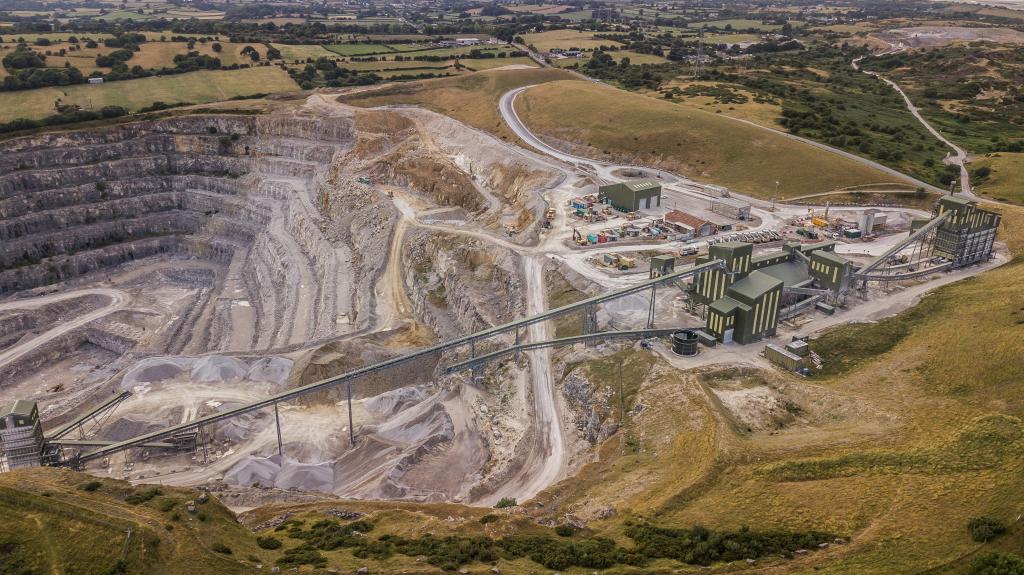
Many mineral owners assume that the greatest threat to their assets comes from competing extraction interests or the ever-increasing regulatory change. However, in practice, one of the most common causes of loss (and sometimes ‘gain’) arises from something altogether more ordinary. Namely, surface development.
Housing schemes, renewable energy projects, highways, utility infrastructure, and commercial developments can all interfere with severed mineral rights. In some cases, minerals are physically removed during construction as part of cut and fill strategy. In others, foundations, underground services, piling, drainage infrastructure or permanent structures sterilise future mineral resources and prevent extraction altogether.
For mineral operators and landed estates holding significant mineral interests, understanding the remedies available is becoming increasingly important.
Severed Mineral Ownership
As a matter of law in this jurisdiction, ownership of land normally includes everything beneath the surface down to the centre of the earth. However, ownership of mines and minerals can be severed from the surface and retained by a third party. This has occurred across England and Wales for centuries and remains particularly common in former mining areas such as Cornwall and large swathes of Northern and Central England.
As a result, it is not unusual for a developer to own the surface land with a separate mineral operator, trust or landed estate owning the mines and minerals beneath.
Where those interests clash, disputes can become significant both commercially, strategically and legally.
What Constitutes Mineral Trespass?
Mineral trespass can occur whenever a party interferes with mineral ownership without lawful authority whether that be via an express consent or reservation of rights.
Examples of acts that may constitute a trespass include:
- Excavation works that remove minerals during site preparation (often as part of a pre-commencement planning conditions);
- The installation of deep foundations or piling through mineral-bearing strata;
- The construction of roads, substations, solar infrastructure or buildings that sterilise future extraction potential.
- Interference with rights of entry, access, surveying or working contained within a mineral title; and
- Extraction of minerals by a neighbouring quarry or mine beyond the limits of what is permitted perhaps either as matter of ownership or workings outside of the state of the demise.
In many modern disputes, the issue is not the value of minerals physically removed. Instead, the dispute centres on the loss of future extraction opportunities and the impact on the value of the mineral estate.
The Risk in Overlooking this as a Developer
Quite reasonably most developers will focus on planning, environmental and title matters affecting the surface. Mineral rights can sometimes be overlooked, particularly where they were severed many decades ago. Indeed, we routinely assist where transactional lawyers have failed to advise correctly. However, a developer who proceeds without dealing with a mineral owner may face:
- an injunction delaying development;
- damages claims;
- claims for interference with easements or ancillary rights; and
- quite significantly, ransom-style negotiations once development has commenced.
This risk becomes particularly acute where substantial expenditure has already been committed to a project and, indeed, as a matter of strategy some mineral owners will wait for some substantive work to commence before engaging with the party trespassing/interfering with the mineral.
Principally, the possibility of an injunction can materially alter the balance of negotiations and increase the value of a mineral owner’s claim.
Damages: It’s not Just the Value of the Minerals
A common misconception is that compensation is limited to the value of any mineral excavated during construction. The position is considerably more nuanced.
Mineral owners may be entitled to recover damages based on the loss actually suffered, which is not necessarily the same as the market value of the minerals removed. In some circumstances, the court may award damages that reflect the benefit obtained by the wrongdoer/trespasser, including gain-based or negotiating damages. In addition, a mineral owner may have a claim in conversion in respect of minerals that have been wrongfully extracted, entitling them to seek recovery of the minerals (where possible) or damages reflecting their value.
In practice, valuation evidence often becomes crucial and more often than not will result in the need to appoint a mineral surveyor.
Relevant considerations for the purposes of a valuation will usually include:
- the extent of mineral sterilisation;
- the likelihood of future extraction;
- planning prospects (if a live issue);
- geological evidence;
- commercial viability;
- interference with associated access and working rights; and
- the extent to which the development can or cannot proceed without the removal of the mineral.
For strategic mineral landholdings, the value of lost opportunity may significantly exceed the value of any minerals physically extracted during development works.
Negotiating Damages and the “Release Fee” Principle
While damages for trespass and breach of legal rights remain primarily compensatory, in certain circumstances, such claims may attract an award of “negotiating damages”. Under this principle, the claimant (mineral owner) may recover sums the defendant (the trespasser) would have paid had they, before committing the wrong, negotiated a release or permission from the claimant (mineral owner).
Injunctions:
From a practical perspective, another valuable remedy available to many mineral owners is an injunction, which can frequently encourage a negotiated settlement. An injunction is a court order requiring a party either to carry out a specific act or to refrain from carrying out a particular act.
Where proceedings are commenced before development or infrastructure works are substantially complete, a mineral owner may seek an injunction restraining further interference with its mineral interests. Whether an injunction will ultimately be granted will depend on the circumstances of the case and remains a matter of judicial discretion. The court will typically consider factors such as the adequacy of damages as a remedy, any delay in seeking relief, the balance of convenience, and the overall justice of the case.
For major developments, even a short delay can carry significant financial consequences. As a result, the prospect of injunctive relief can provide mineral owners with considerable leverage in negotiations. It is therefore important for mineral owners to act promptly when a potential trespass or interference is identified and to seek early legal advice.
Practical Steps for Mineral Owners
To reduce risk, it is recommended that mineral operators and landed estates:
- Maintaining accurate records of mineral ownership and reservations;
- Ensuring titles are properly registered where possible;
- Regularly monitoring planning applications affecting key holdings (set up alerts where you can);
- Reviewing major infrastructure and renewable energy proposals at an early stage;
- Commissioning valuation and geological evidence promptly where interference is suspected; and
- Where strategically appropriate, engaging with developers before works commence.
In many cases, taking action at an early stage will achieve a more favourable outcome than attempting to pursue compensation after development or construction has been completed.
Finally, it is important to note that certain minerals, including coal and petroleum, are subject to separate statutory regimes and where such minerals are involved it may be appropriate to consider additional factors.
Conclusion
Mineral rights are often overlooked during the development process, particularly where ownership has been severed many decades ago and does not feature prominently in the title investigations undertaken for a project. However, as development pressures continue to increase, conflicts between surface development and subsurface ownership are becoming more common.
For mineral operators, landed estates and institutional mineral owners, the legal remedies available can be significant. Claims are not necessarily limited to the value of any minerals physically removed and may extend to sterilisation of mineral resources, interference with associated rights, negotiating damages and, in appropriate cases, injunctive relief. Equally, for developers, a failure to identify and address mineral interests at an early stage can create substantial commercial risk, particularly once significant investment has been committed to a scheme.
Mineral rights should not be treated as a historic curiosity or a minor title issue. They remain valuable property rights capable of attracting meaningful legal protection and requires a proactive approach. If you would like to discuss mineral rights, potential trespass issues, or strategies for safeguarding mineral interests from development and infrastructure projects, please contact our Mining and Minerals Team, supported by our Property Litigation Team, on 01872 265100 for a preliminary discussion.
This article was co-written by Ben Jones Partner and Christine Yau, Trainee Solicitor, in our Property Litigation team.