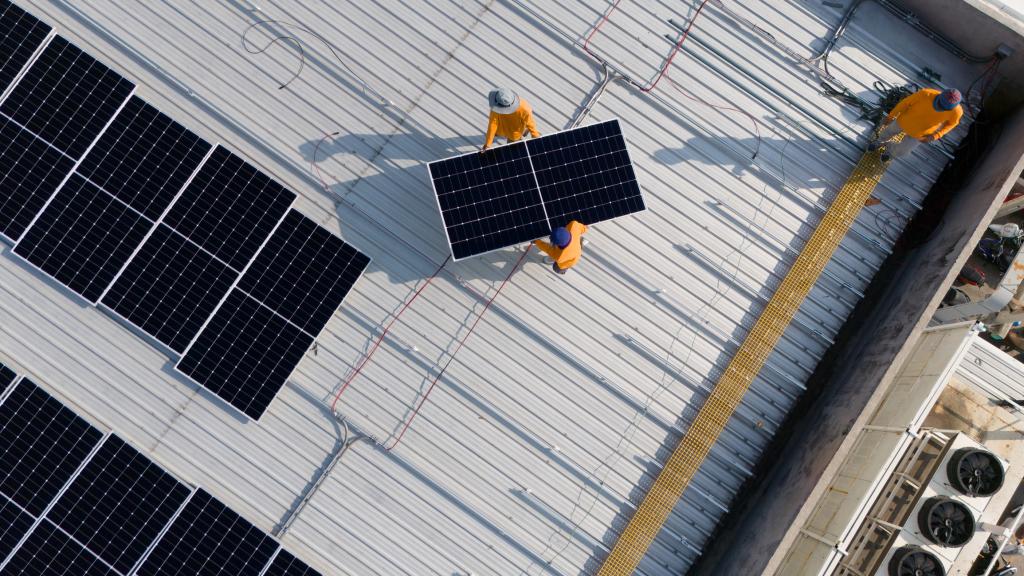
Have you considered installing solar photovoltaic panels on your roof but been deterred by the cost? If so, one solution may be to grant an airspace lease to a solar developer. We are increasingly seeing businesses lease the air above their properties and granting roof top rights to solar developers for a nominal rent in exchange for reduced-rate electricity supplied direct to their buildings.
Solar developers are driving this revolution as it allows them to secure cheap sites with looser planning restrictions, as compared to ground mounted solar sites.
Utilising unused roof space with ‘behind-the-metre’ solar installations brings clear economic and environmental benefits. However, it is a relatively new area and there are numerous pitfalls to navigate. This article explores some of those issues.
Who owns the air?
Before engaging with a solar developer, you will need to check that you own the air above your building. If you own the freehold estate or (subject to some caveats) have a long lease of the whole of your building, then you will own the airspace above “to such height as is necessary for the ordinary use and enjoyment of [the] land”. Leases of part are more complicated and will need to be scrutinised to determine whether they demise the airspace.
A solicitor can confirm ownership by reviewing the title to your property and (if applicable) your lease. They will also need to check:
- Whether there are any restrictions registered on your title which need to be satisfied before you can grant the lease (for example, if the property is charged you will likely need to get lender consent); and
- Whether there are any restrictive covenants or third-party rights which may affect the viability of the transaction (for example, there may be a restrictive covenant prohibiting alterations to the exterior of the building).
Sharing the roof
How is your roof currently used? Who else has rights to use the roof, and for what – a roof terrace? Also consider if there is already equipment on the roof, such as telecoms apparatus. Is there enough room for the panels, and would the grant of the rights to install and use the panels cut across any pre-existing third party rights? These issues may prevent the lease getting off the ground…and the panels onto the roof!
The lease will need to grant the solar developer rights of entry to the roof and to install, repair and maintain the equipment and to connect the panels to the power supply at the property. You will need to make sure that you can grant these rights.
Lease
Bespoke drafting
An airspace lease needs to be treated differently to a standard commercial property lease. Bespoke drafting is required, particularly in relation to defining the demise, ensuring appropriate rights are granted to the developer and reserving rights of entry and repair to the landlord.
The financial arrangement between the parties needs to be agreed on a commercial level, specifically in terms of whether the lease will sit alongside a power purchase agreement (discussed below) or whether other structures are to be used. For example, the solar developer could take a market rent lease with no obligation to supply the landlord with electricity. Also consider whether you want to contribute to the cost of installation – if so, the rental structure will need to reflect how your investment will be recouped.
Repair and reinstatement
The drafting of the repair covenants needs to be watertight, much like the roof after the panels have been installed! Ensure the developer is required to make good any damage caused by the installation and removal of the panels at the end of the lease.
If lift and shift provisions are included in the lease, the developer may require compensation to be paid by you for any lost revenue during any relocation of the panels.
The lease term will be the operational lifespan of the panels, which are generally expected to last around 30 years. The lease should require the tenant to remove the equipment at the end of the term or otherwise transfer ownership to the landlord. You should consider whether there is any value in retaining the panels (they may still work) or if it is preferable to require the developer to remove them.
Funder protection provisions
The developer will likely require funder protection provisions, to allow a funder to ‘step in’ and take over the project if the developer defaults on its loan. This would include a requirement for the landlord to enter a direct agreement with the funder.
Power purchase agreement
A power purchase agreement (PPA) governs the sale of the electricity generated by the panels to the landlord. The PPA will specify the price to be paid by the landlord for the supply, and although pricing terms vary it will generally be below grid-rates in consideration for the grant of nominal rent lease. PPAs also deal with the export of excess electricity to the grid, allocate risk when the panels under-perform and include covenants on the developer, for example, to maximise the production of electricity.
It is important to make sure that the terms of the lease and PPA dovetail. For example, termination of one should terminate the other and if the property is sold or the lease assigned, the PPA should include provisions allowing for its transfer to the new owner.
How we can help
Solar airspace leases are complex and require specialist legal input. If you have any questions, please do get in touch with our Energy Team.