

Following the Autumn Budget 2025, Stephens Scown, along with Carter Jonas and Francis Clark, co-hosted an update on what it meant to farmers and landowners as part of the Firm’s support of the rural sector.
Held once again at the Royal Cornwall Showground, the event drew a large audience eager to hear from experts across a wide range of agricultural topics. Aimed at key decision‑makers within the sector, it offered valuable guidance on the steps needed to protect land and property in the years ahead. Given the industry’s significance to the South West, the evening proved highly worthwhile, with guest speakers sharing an impressive depth of knowledge and insight.
Phil Reed, Partner at Stephens Scown, and head of the firm’s rural team, spoke on the topic of succession planning and getting ready for the future. That meant looking at partnership agreements, which should be updated to include detailed provisions for farm property and, if necessary, to include a Declaration of Trust to bring property into the partnership. He also recommended that a Land Capital Account should be included.
The biggest change from the budget which impacted the audience was the £2.5 million personal allowance for Agricultural Property Relief (APR) and Business Property Relief (BPR), which would be transferable between spouses. Thought of favourably by the attendees, Phil spoke about leaving the zero-rated allowance in a person’s Will or setting up a Discretionary Trust to hold the allowance in a separate legal entity.
Sarah Atkinson, Partner in the Family team, and James Burrows, Partner in the Inheritance and Trust Disputes team, covered managing the risks of succession planning in their talks. Sarah discussed potential barriers to succession planning, such as fearing a loss of control, the difficult conversations, and fears about relationships breaking down. She also stressed the importance of getting pre- and post-nuptial agreements in place to guard against possible financial claims, costly valuation exercises and court proceedings, and the risk of damaging parental relationships.
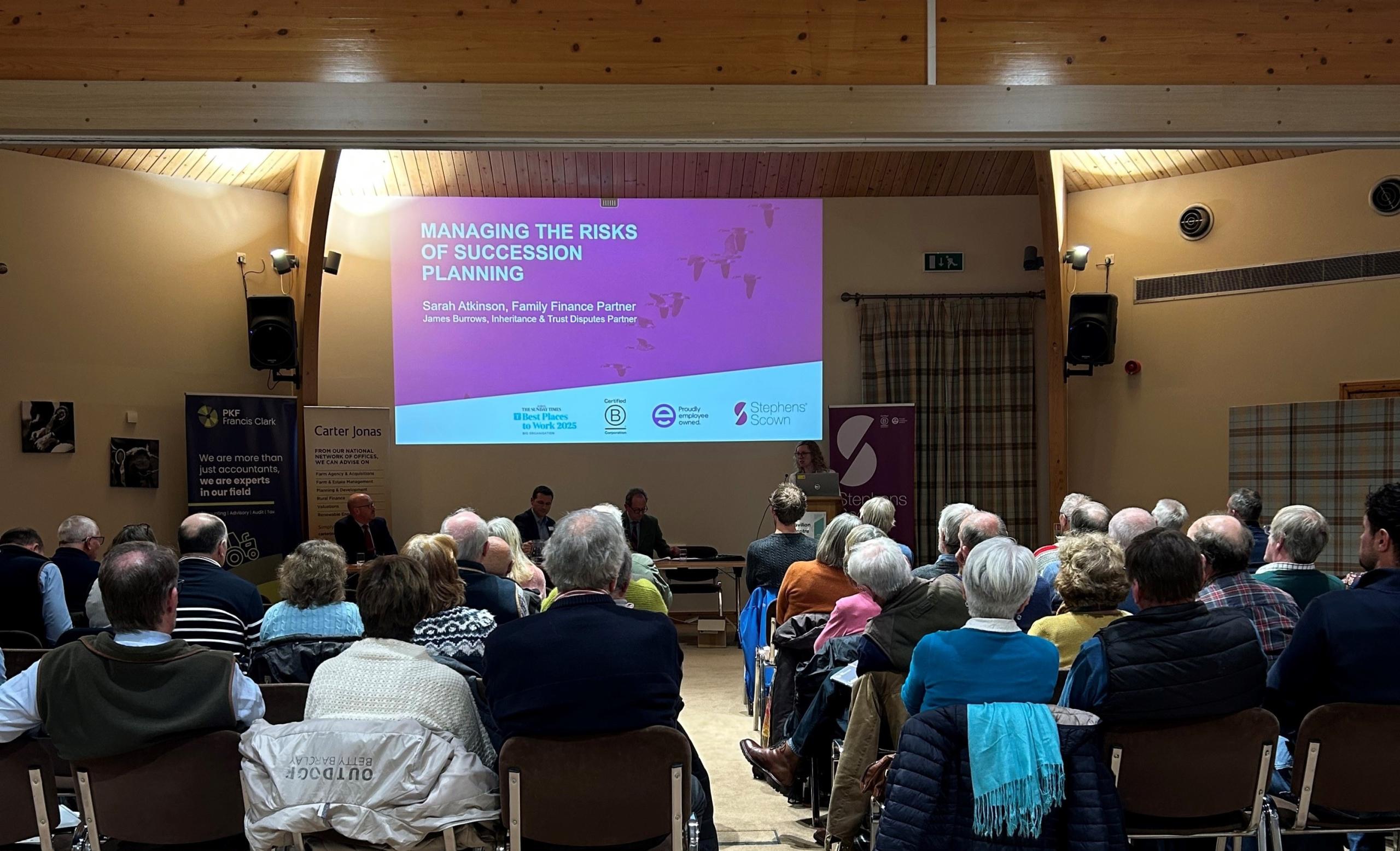
A nuptial agreement is the best insurance policy you can buy against the risks of divorce when it comes to succession planning, particularly as family farms are often passed on from generation to generation. They should be seen as part of a conversation between couples from the start, with an overarching aim of preserving the farm for the benefit of future generations.
In his presentation, James expanded on the steps families can take to keep farms within the family, including the use of cohabitation agreements. He explained that these documents are both binding and flexible and need not be viewed as unromantic. While such agreements end upon marriage, couples can then put pre‑nuptial agreements in place, as previously recommended by Sarah. James emphasised the importance of clearly setting out expectations within a relationship and maintaining open, ongoing conversations. Seeking legal advice early, he noted, enables families to plan for the worst while hoping for the best.
It proved an insightful evening for guests and a good opportunity to raise awareness of the latest legal and financial implications of the budget for those in the rural community.
If any of the topics mentioned in this article is something you require advice for then please get in contact.