With succession planning, inheritance tax and protecting wealth for future generations high on the agenda for many farming and landowning families, understanding the options available has never been more important.
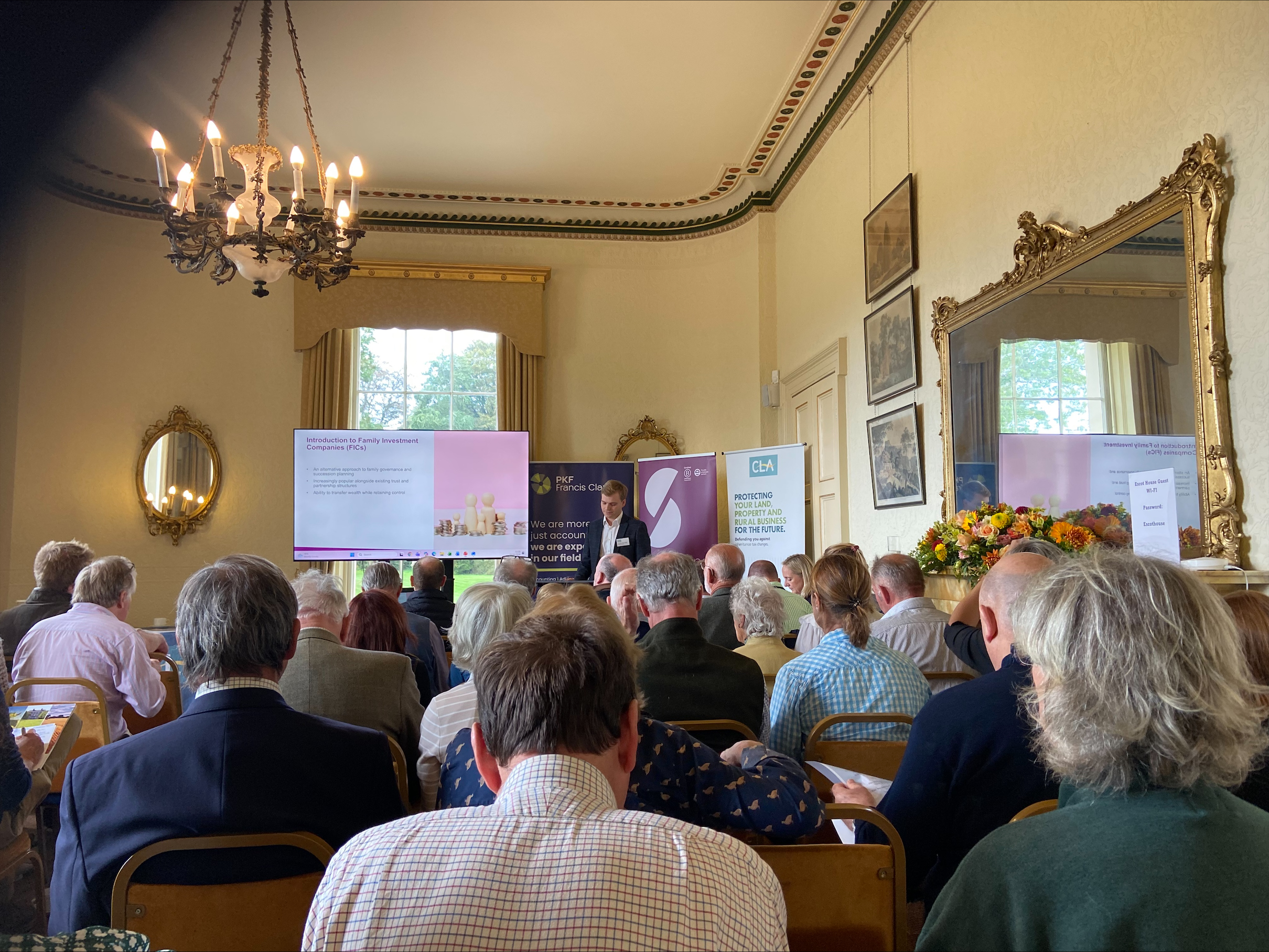
A recent event, held in partnership with the Country Land and Business Association (CLA), PKF Francis Clark, Rathbones and Strutt & Parker, brought together advisers, farmers and landowners to discuss the latest legal, financial and tax developments affecting the rural sector. Among the topics explored were succession planning, wealth preservation and the role that Family Investment Companies can play in helping families plan for the future.
Topics included the latest considerations around capital gains tax, inheritance tax and potential reliefs available, as well as how to put the right plans in place to pass on land and assets to the next generation.
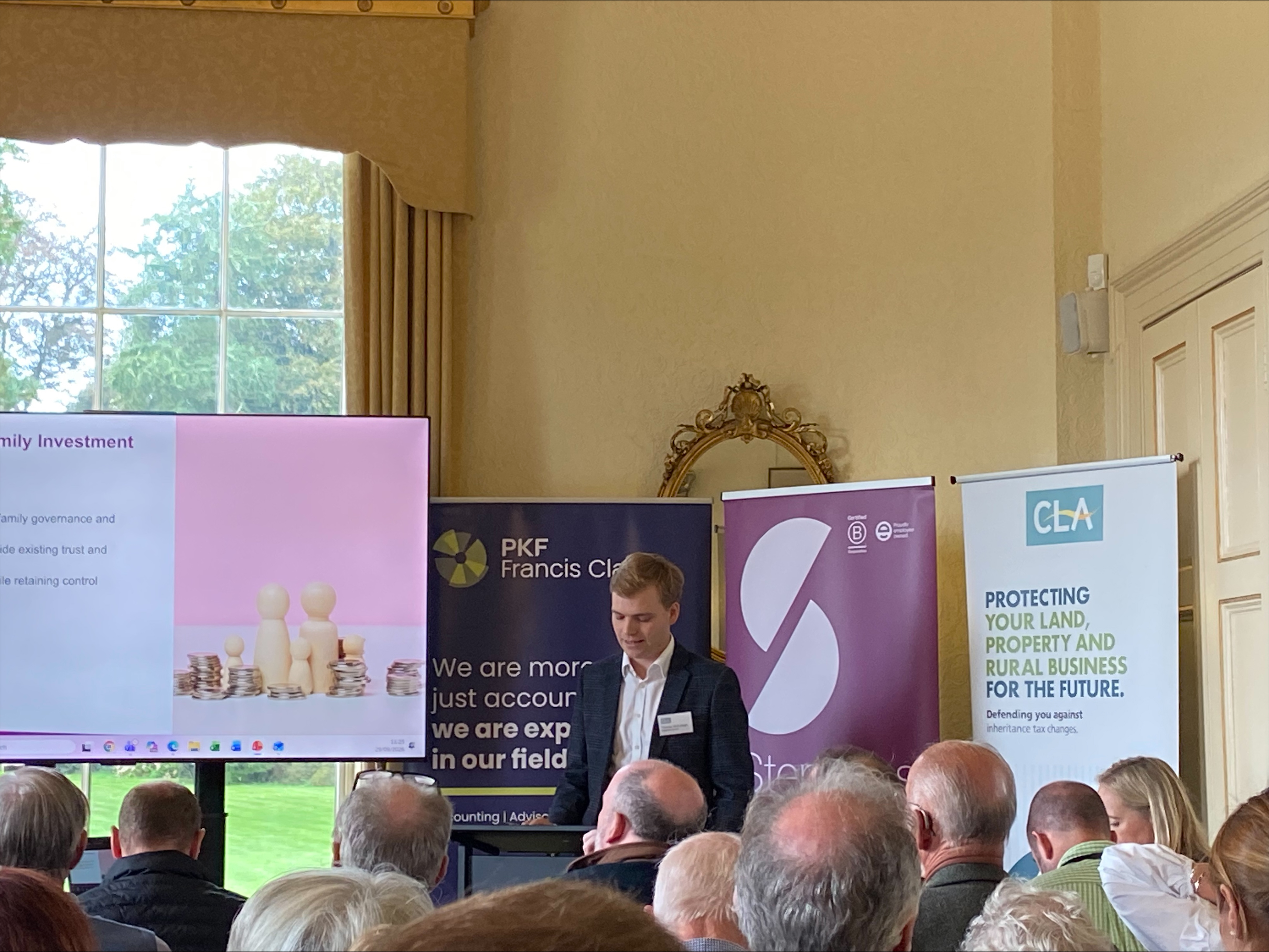
From Stephens Scown, Corporate Lawyer Thomas McCullagh shared his expertise on the challenges facing farming families as tax planning becomes increasingly complex.
He spoke about Family Investment Companies (FICs), an alternative approach to family governance and succession planning that is increasingly being used alongside trusts and partnership structures.
What is a Family Investment Company?
A Family Investment Company is a private company used to hold and manage family wealth and investments. Depending on a family’s circumstances, it can form part of a wider succession planning strategy, helping future generations build an interest in family assets while allowing oversight and control to be retained.
Thomas said:
“Rural businesses are increasingly looking for ways to separate investment wealth from the operational farming business while still maintaining family control. Family Investment Companies can provide a flexible framework, but they need careful planning and specialist advice.”
There are several reasons why FICs have grown in popularity, including:
- Supporting long-term succession planning
- Helping transfer wealth across generations
- Retaining family control over investments and decision-making
- Providing flexible ownership structures and a formal governance framework
For some rural families, FICs can provide a useful way of holding wealth generated outside traditional farming activities. They can help separate investment assets from the core farming business, supporting succession planning where family members have different levels of involvement. This can allow families to distinguish between ownership of the working farm and ownership of accumulated wealth.
When considering whether to establish a FIC, it is important to seek specialist advice. Every family and farm business is different, which is why succession planning should start long before ownership needs to change hands. Exploring the available options early can help preserve both family relationships and long-term wealth.
If you would like to learn more about FICs, please contact us.