
The South West is the largest tourism region outside London, with visitor spending worth more than £10 billion and supporting hundreds of thousands of jobs across the region. Tourism is a vital contributor to the economies of Cornwall, Devon, Somerset and Dorset, sustaining businesses, supporting local communities and underpinning a wide range of sectors, from accommodation, hospitality and attractions to retail, transport, and professional services. For many coastal, rural, and seasonal communities, tourism is not simply an economic benefit but a cornerstone of local prosperity.
It is therefore understandable that proposals to increase the cost of visiting a destination – such as the introduction of a tourism levy – generate concern across the sector.
Many tourism businesses are already managing rising operating costs, inflationary pressures, increased employment costs and changing visitor behaviour. Against that backdrop, the prospect of additional charges on overnight stays raises legitimate questions about competitiveness, visitor demand and the cumulative effect of increasing costs on an industry that remains critically important to the South West economy.
Nearly a decade ago, we explored concerns around the possibility of a tourism tax and the effect it could have on visitor numbers, tourism businesses and local economies. At the time, the concept remained largely theoretical. Today, the conversation has moved on significantly.
The Welsh Visitor Levy has now become law, giving local authorities the ability to introduce a charge on overnight stays within their areas should they choose to do so following consultation with local communities and businesses. The earliest a levy could be introduced is 2027. The legislation also establishes a national register for visitor accommodation providers operating in Wales.
Under the framework, councils that adopt the levy will be able to charge £1.30 per person per night for most overnight accommodation and 75p per person per night for certain lower-cost accommodation such as campsites, hostels and bunkhouses. Revenue generated will be retained locally and may be used to support tourism-related infrastructure, services and destination promotion.
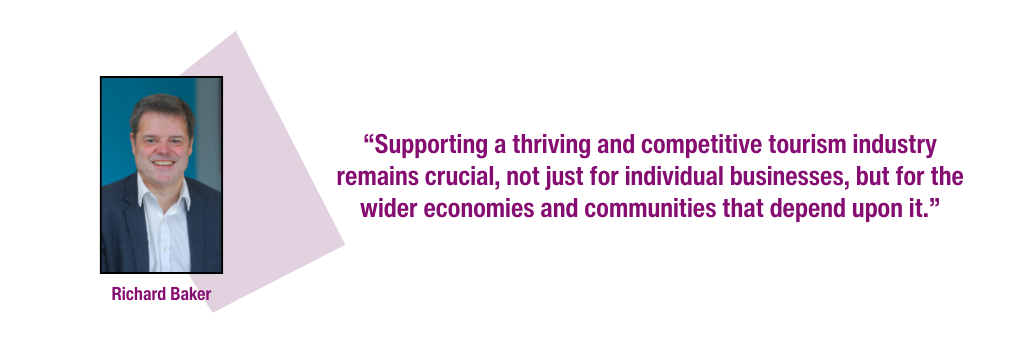
Richard Baker, Managing Partner at Stephens Scown, comments:
“The leisure and tourism sector is fundamental to the South West economy and to the communities that rely on it. Across Cornwall, Devon, Somerset and Dorset, tourism supports jobs, drives investment and sustains thousands of businesses.
“We understand why many operators have concerns about the introduction of visitor levies. At a time when businesses are already facing increasing costs and economic uncertainty, any additional charge has the potential to influence visitor decisions and affect competitiveness, particularly in a sector that works hard to offer value and exceptional experiences.
“While it will take time to understand the full impact of the Welsh levy, tourism businesses will understandably be paying close attention to how it affects visitor behaviour, spending patterns and investment across the sector. Supporting a thriving and competitive tourism industry remains crucial, not just for individual businesses, but for the wider economies and communities that depend upon it.”
A sector already facing significant pressures
The introduction of a visitor levy comes at a time when many tourism and hospitality businesses continue to face challenging trading conditions.
Operators across the sector are navigating increased employment costs, inflationary pressures, changing consumer spending habits and growing regulatory obligations. At the same time, many businesses are continuing to invest in facilities, sustainability initiatives, and visitor experiences to remain competitive.
Against that backdrop, it is understandable that many businesses are assessing what a visitor levy could mean for customer demand, pricing strategies and profitability.
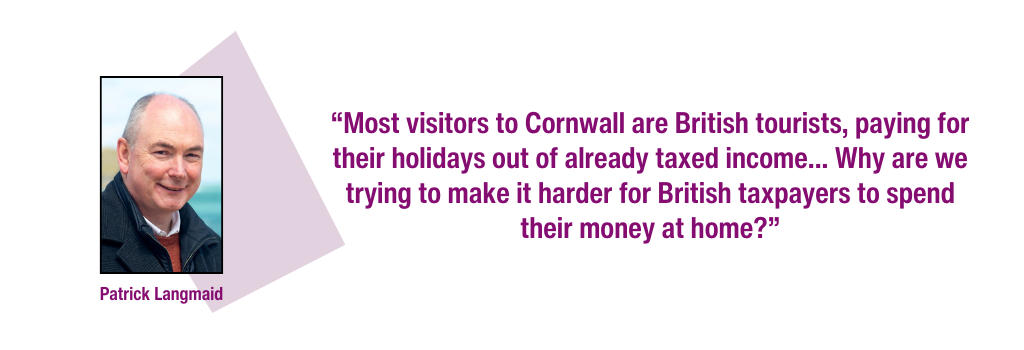
Patrick Langmaid, chair of HARPA’s Cornwall branch and managing director of Mother Ivey’s Bay Holiday Park in North Cornwall, comments:
“Local tourism businesses like ours are the lifeblood of the local economy, particularly in areas like Cornwall. At Mother Ivey’s Bay, we support other small businesses and charities, pay living wages to all our staff and offer free stays for families who cannot afford a break.
“Most visitors to Cornwall are British tourists, paying for their holidays out of already taxed income. They could have chosen a week in Spain but have instead chosen to holiday here. Why are we trying to make it harder for British taxpayers to spend their money at home?
“We have always used our business as a platform to do good, working with local foodbanks, environmental groups, the lifeboat rescue crew and other charities rather than simply maximising profits. But if we scare off holidaymakers with a holiday tax, it could damage the bottom line that enables us to provide that vital lifeline for jobs, businesses and charities.”
For many operators, the principal concern is not just the level of the charge itself, but its cumulative impact. In an industry where booking decisions can be heavily influenced by perceptions of value, even relatively small additional costs can become significant when applied across families, group stays or longer holidays.
Potential economic and business impacts
The debate around visitor levies often centres on balancing investment in tourism infrastructure against potential impacts on visitor demand.
Supporters argue that levies provide local authorities with an additional revenue stream that can be invested back into destinations, helping maintain public spaces, visitor facilities, transport infrastructure and tourism promotion.
However, economic modelling undertaken as part of the policy development process has also indicated the possibility of reduced visitor expenditure, with assessments suggesting the levy could have wider implications for tourism-related spending and employment should visitor behaviour change as a result. Industry bodies have highlighted concerns that reductions in visitor spend could affect businesses operating throughout the tourism supply chain. For a sector that contributes significantly to local economies and supports employment across coastal, rural and urban communities, any reduction in visitor spending is naturally cause for concern.
This is particularly relevant in the South West, where tourism is one of the region’s most significant economic sectors. Any reduction in visitor numbers or visitor spending can have consequences far beyond accommodation providers, affecting restaurants, attractions, retailers, transport operators, local suppliers and the communities that depend on a strong visitor economy.
For accommodation providers, there are also practical considerations. Businesses may need to adapt booking systems, introduce new administrative processes, communicate charges clearly to customers and ensure compliance with reporting requirements.
For destinations such as those found across the South West, which compete strongly on value, accessibility and visitor experience, even relatively small increases in the overall cost of a stay may have implications for competitiveness when visitors are comparing destinations. This is particularly relevant for families and those taking longer breaks, where additional costs can accumulate over the course of a visit.
Learning from other destinations
Wales is not the first destination to introduce a visitor levy.
Across Europe, tourism taxes have been in place for many years in destinations including Barcelona, Amsterdam and Venice, often as a means of funding local services and infrastructure associated with visitor numbers.
Closer to home, Scotland has passed legislation enabling local authorities to introduce visitor levies, with Edinburgh expected to be among the first councils to implement one. Wales has now followed a similar route by providing local authorities with the power to decide whether a levy is appropriate for their area.
The experience of other destinations demonstrates that the impact of visitor levies is rarely straightforward. Visitor numbers are influenced by several factors, including economic conditions, accommodation prices, exchange rates, transport costs, and consumer confidence.
However, one theme consistently raised by tourism businesses is competitiveness. For destinations that rely heavily on domestic visitors, even relatively small changes in the overall cost of a holiday can influence purchasing decisions, particularly for families and visitors comparing different regions.
Why South West businesses are watching closely
Although the Welsh legislation applies specifically to Wales, businesses across Cornwall, Devon, Somerset and Dorset will be paying close attention to how the levy operates in practice.
The South West is the largest tourism region outside London, generating more than £10 billion in visitor spending and supporting hundreds of thousands of jobs. The region’s hospitality, leisure and tourism sectors are built on a reputation for delivering excellent visitor experiences, often within highly competitive markets.
For many businesses, the key question is how changes in policy affect consumer behaviour. Whether visitors choose one destination over another can be influenced by a range of factors, including affordability, accessibility, quality of experience and overall value for money.
As businesses continue to navigate rising costs and ongoing economic uncertainty, developments that have the potential to influence visitor demand, business administration or investment decisions are likely to remain a focus for the sector.
Supporting the leisure and tourism sector
At Stephens Scown, we work with leisure and tourism businesses throughout Cornwall, Devon, Somerset and Dorset and understand the opportunities and challenges that come with operating in one of the UK’s most important visitor economies.
From holiday parks, hotels and holiday accommodation providers to visitor attractions, restaurants and experience-led businesses, our clients play a vital role in supporting local communities and regional prosperity. We also recognise that many operators continue to balance investment, growth ambitions and changing customer expectations against an increasingly complex commercial and regulatory landscape.
Our specialist Leisure and Tourism team provides practical, commercially focused advice across areas including property, employment, corporate transactions, intellectual property, regulatory compliance and strategic business planning. As the visitor levy framework develops and its impact becomes clearer, we will continue to monitor developments and support clients in responding to the legal and commercial issues affecting the sector.
How can we help?
If you would like to discuss how developments in the tourism sector could affect your business, get in touch with our specialist Leisure and Tourism team. We work with businesses across the South West to help them navigate legal, regulatory and commercial challenges, enabling them to focus on delivering exceptional visitor experiences and building sustainable growth.